
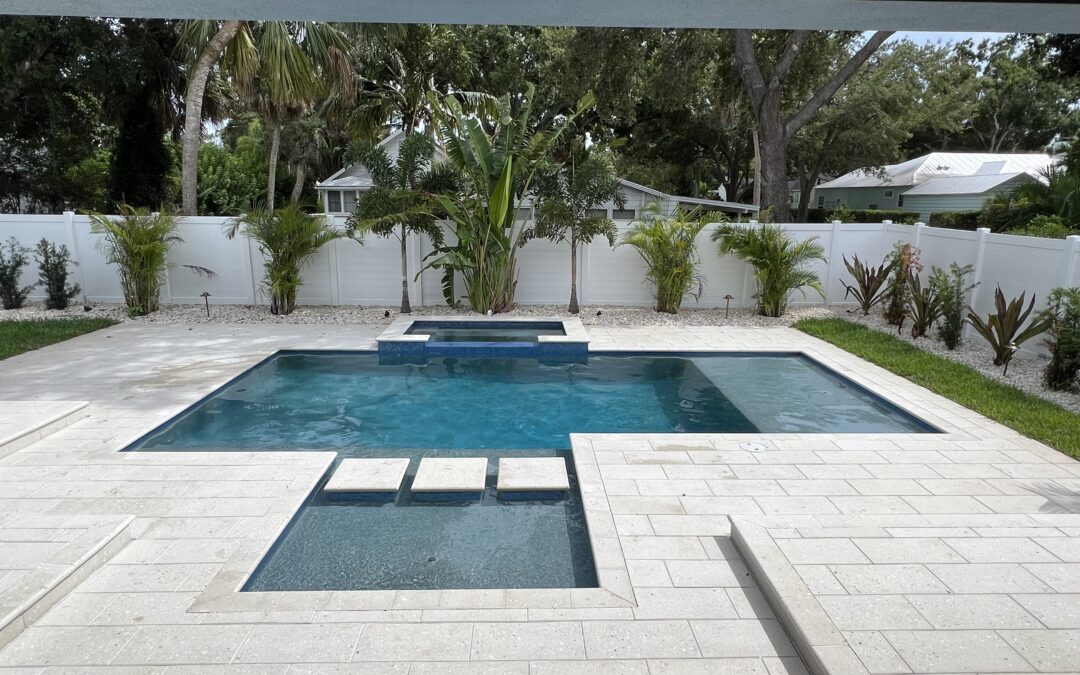
A beautiful pool deserves a beautiful setting. The right landscaping can transform a pool area into a relaxing backyard retreat, adding privacy, color, shade, and a finished look to your outdoor space.
But in Florida, landscaping around a pool comes with its own challenges. Between intense heat, heavy rain, humidity, and the occasional storm, choosing plants and materials that can handle the climate is important.
The good news? You don’t need a high-maintenance garden to create a beautiful pool area.
With the right plants and thoughtful planning, you can have a backyard that looks great without spending all your free time trimming, watering, and cleaning up after it.
Choose Plants That Can Handle Florida’s Climate

One of the easiest ways to reduce landscaping maintenance is to choose plants that are naturally suited to Florida’s conditions.
Look for plants that can tolerate heat, humidity, and periods of heavy rain. Native and Florida-friendly plants are often a great starting point because they’re better adapted to the local environment.
Some popular options for Florida pool areas include:
- Palms for a classic tropical look
- Bird of paradise for bold, tropical foliage
- Muhly grass for texture and movement
- Dwarf yaupon holly for structured, low-maintenance greenery
- Coontie palms for a Florida-friendly option with a tropical appearance
- Agave and other suitable succulents for areas with plenty of sun
- Liriope for attractive, easy-care ground cover
The best plants for your backyard will depend on factors such as sunlight, soil, drainage, and the amount of space available.
Think About What Will End Up in the Pool
Not every beautiful plant is a great choice next to a swimming pool.
Trees and plants that drop lots of leaves, flowers, berries, or other debris can create additional pool maintenance. Some plants can also have invasive root systems or grow quickly enough to become difficult to manage.
When planning your landscaping, consider how close plants will be to the pool and where their leaves or other debris are likely to fall.
This doesn’t mean you have to avoid trees and larger plants altogether. It simply means placement matters.
A well-designed landscape can give you the shade and privacy you want without constantly filling your pool with debris.
Consider Drought-Tolerant Landscaping
Florida gets plenty of rain, but that doesn’t mean every plant needs frequent watering.
Drought-tolerant plants can be a smart choice for areas that receive lots of direct sunlight. Once established, many require less supplemental irrigation than plants that need consistently moist soil.
Grouping plants with similar watering needs together can also make irrigation easier and more efficient.
For homeowners looking to reduce maintenance, a well-planned irrigation system combined with appropriate plant selections can make a big difference.
Use Mulch and Ground Cover Strategically
Bare soil around a pool can quickly become a maintenance headache. Mulch and appropriate ground cover can help create a cleaner, more finished appearance while reducing the amount of exposed soil.
Mulch can also help retain moisture and suppress weeds.
However, be thoughtful about the type of mulch you use around your pool. Loose materials can find their way into the water or onto pool decking, so areas immediately surrounding the pool may benefit from hardscaping instead.
Let Hardscaping Do Some of the Work
Low-maintenance landscaping doesn’t have to mean filling every available space with plants.
Incorporating hardscaping—such as pavers, decorative stone, pool decking, or pathways—can create visual interest while reducing the amount of landscaping that needs regular care.
This can be especially helpful around smaller pools or busy outdoor living areas.
Combining a few well-placed plants with attractive hardscape materials can create a clean, modern look without turning your backyard into a full-time gardening project.
Create Privacy Without Constant Trimming

Privacy is a major consideration for many Florida pool owners, but traditional hedges can require frequent trimming.
Instead, consider plants that naturally maintain their shape or grow at a manageable rate. Palms, ornamental grasses, and carefully selected shrubs can provide screening while requiring less ongoing maintenance.
You can also combine landscaping with features such as screen enclosures, privacy walls, fencing, or strategically placed structures.
The result can be a more private pool area without relying entirely on a wall of fast-growing hedges.
Don’t Forget About Shade
Florida sunshine is one of the biggest reasons people love spending time outdoors, but too much direct sun can make a pool area uncomfortable.
Strategically placed trees and larger plants can provide natural shade while adding dimension to the landscape.
Just remember to consider their mature size and proximity to the pool before planting. A tree that looks appropriately sized when it’s young may eventually become much larger.
Planning for the future can help prevent landscaping problems later.
Keep Plants Away From Pool Equipment
Pool equipment needs room to operate and should remain accessible for maintenance and repairs.
Avoid placing dense landscaping directly around pumps, filters, heaters, and other equipment. Plants can also drop leaves and debris into equipment areas, making maintenance more difficult.
Instead, leave adequate space around your equipment and use landscaping to soften the area without completely covering it.
Plan Your Landscaping With Your Pool
The easiest way to create a low-maintenance pool landscape is to think about the entire backyard during the design process.
Consider:
- How much sun different areas receive
- Where rainwater drains
- How large plants will become
- How much debris they produce
- Where you’ll need privacy
- Where you want shade
- How close plants are to the pool
- How much maintenance you’re willing to do
Thinking about these details before planting can save you time, money, and frustration later.
Create a Backyard That’s Beautiful and Easy to Enjoy
The best pool landscaping isn’t necessarily the landscaping with the most plants. It’s landscaping that works with your space, your lifestyle, and Florida’s climate.
By choosing Florida-friendly plants, incorporating hardscaping, planning for privacy and shade, and considering maintenance from the beginning, you can create a pool area that feels lush and inviting without requiring constant upkeep.
Your backyard should be a place where you can relax—not another chore on your to-do list.
Whether you’re building a new pool or updating an existing backyard, thoughtful landscaping can help bring the entire space together and create an outdoor area you’ll enjoy for years to come.
Comments